If you are searching for how to dispose of old car batteries, you are already doing the smartest thing: not tossing them in the trash and hoping for the best. In Pinellas County, you have a few easy options for batteries, plus other auto junk like tires, fluids, and bulky parts, as long as you sort it properly.
If you are clearing out a garage, shed, or shop at the same time, it can help to bundle the whole cleanup so you are not making five separate trips. Some people schedule junk removal services when batteries are only one piece of a bigger mess.
Why Old Car Batteries Need Special Disposal
Most “standard” car batteries are lead-acid batteries. That means they contain lead and battery acid, which is exactly why they should not go in household trash.
If a battery cracks or leaks, that liquid can damage floors, irritate skin, and create a bigger cleanup problem than you started with.
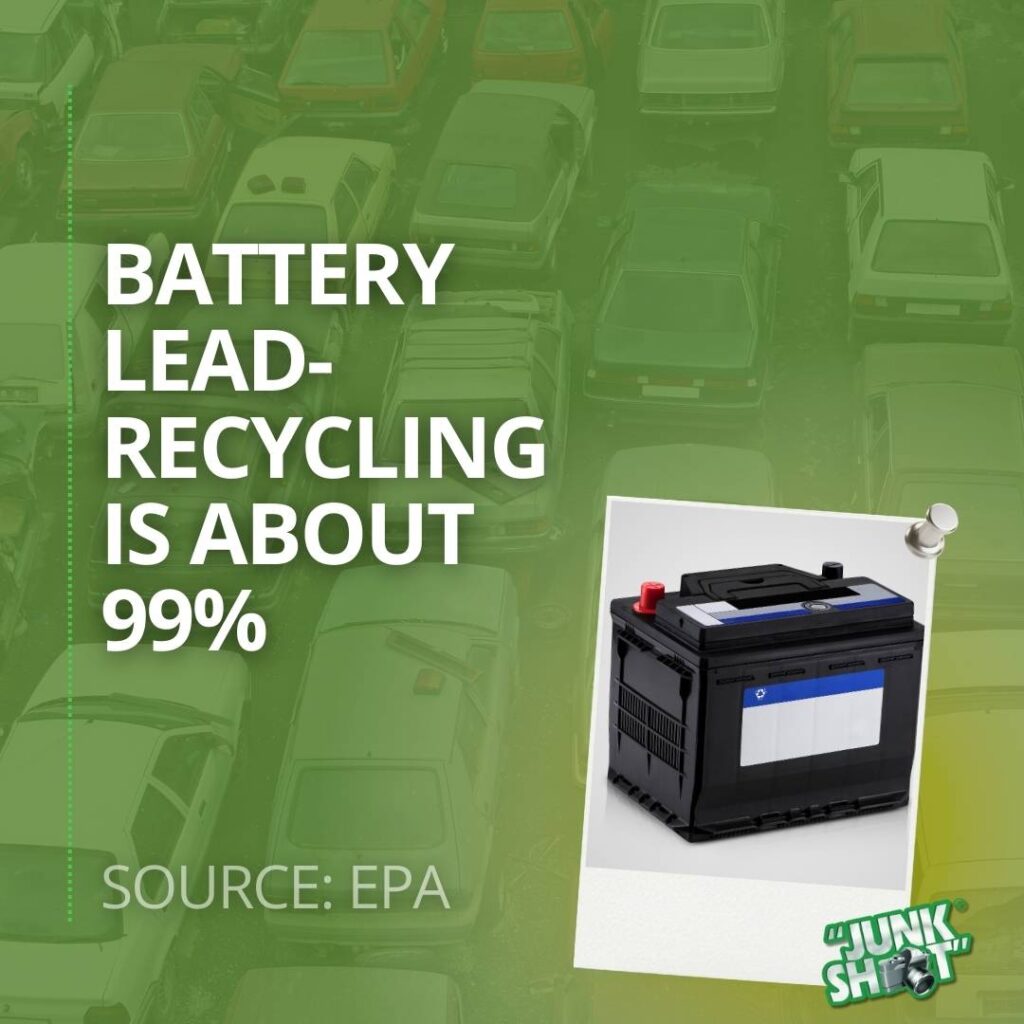
There is also a second reason to recycle them: car batteries are one of the most recyclable items around. The materials can be recovered and reused instead of taking up space in a landfill. The key is getting them to the right place, in one piece, without spills. Practical battery recycling steps make the whole process much less intimidating.
How to Tell What Kind of Car Battery You Have
Before you decide where to take your battery, check the label for 30 seconds. Knowing which type you have helps you choose the right drop‑off and handle it safely from the garage to the car trunk.
Common Battery Types You Might See
- Lead-acid (flooded): The classic heavy car battery. Often has caps and warning labels.
- AGM (Absorbed Glass Mat): A sealed lead-acid style battery, common in newer vehicles.
- Lithium-ion: More common in EVs, hybrids, and some specialty vehicles that may have different fire and disposal risks.
If you are not sure what you are looking at, treat the battery like a lead‑acid model, keep it upright, and protect it from bumps until you can drop it off. When in doubt, you are better off assuming a battery needs careful handling instead of guessing.
Safe Handling Tips Before You Move a Battery
You do not need a hazmat suit to move a car battery, but a little caution makes the job safer and less stressful. Think of this as basic garage safety, not a complicated science lesson.
Quick Safety Rules That Make This Easy
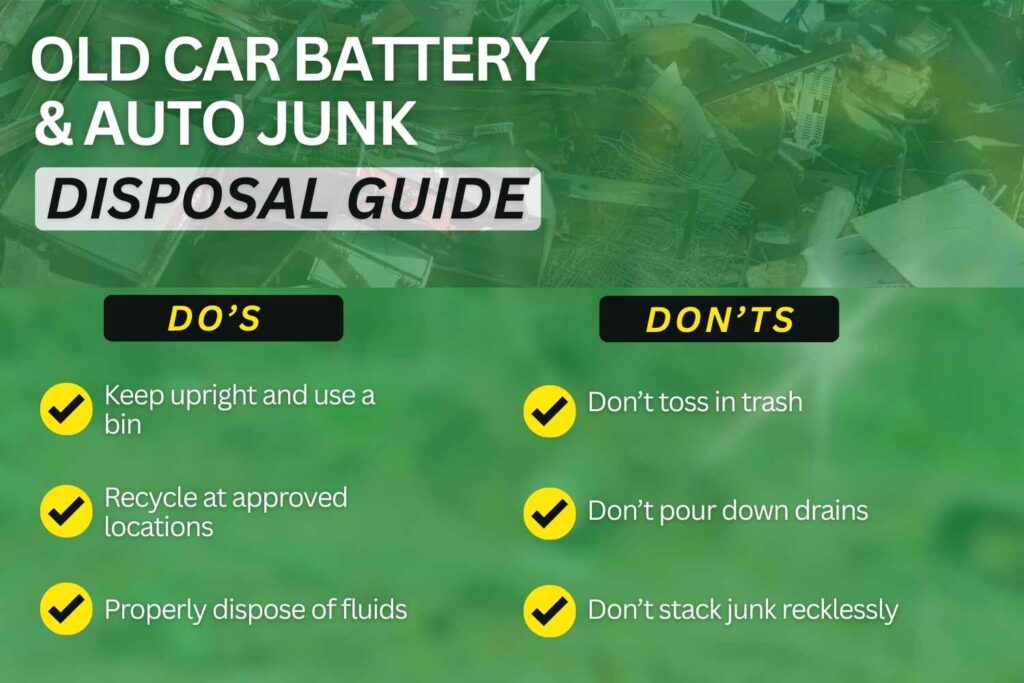
- Keep the battery upright the entire time so liquid stays inside the case.
- Wear gloves if you see any crusty buildup or damp spots around the posts or seams.
- Tape the terminals (the metal posts) with electrical tape to reduce the risk of accidental contact.
- Put the battery in a plastic bin or thick plastic bag during transport in case of leaks.
- Do not open the case and do not try to drain the liquid yourself.
If you notice active leakage, keep the battery off concrete or finished flooring when possible so acid does not stain or damage the surface. A cheap plastic tray or shallow bin in the garage can contain any drips until you are ready for a safe hazardous waste drop‑off.
Best Places to Dispose of Old Car Batteries in Pinellas County
Pinellas County offers a mix of practical options for getting rid of car batteries and related auto junk, and the best choice depends on how much you have and how mobile you are.
Retail Drop-Off at Auto Parts Stores
Many auto parts stores accept used car batteries for recycling. This is often the fastest route if you already have errands to run. Call ahead so you do not show up during a busy rush, and ask if there are any limits on quantity.
This option is great when you have one battery, it is intact, and you can transport it safely.
Household Hazardous Waste Drop-Off
Household hazardous waste (HHW) programs are designed for items that should not go in the normal trash. If you have a leaking battery or you are doing a bigger garage cleanout and also have other “do not trash” items, this can be a good fit.
Think of this as the “no guessing” option when you want to be extra careful.
As a quick rule of thumb, Junk Shot can typically help with many common non-hazardous items, like:
- Furniture
- Appliances
- Office items and electronics
- Household and storage items
- Yard and garden waste
- Metals
However, items like these usually require special handling and should go through an HHW program instead:
- Hazardous materials
- Biological or toxic waste
- Radioactive materials
Car batteries (and similar batteries) should be handled through a proper drop-off option. HHW programs are often a good fit, especially if they are leaking or damaged.
Full-Service Pickup When It Is Part of a Bigger Cleanout
Sometimes the battery is not the main problem. It is the pile around it: broken shelves, old patio furniture, renovation debris, or a garage full of “I will deal with it later.”
If you are already planning a cleanout in Pinellas County, it can be simpler to handle everything in one sweep, especially for property managers, landlords, and busy homeowners.
Other Auto Junk People Forget About Until It Is Everywhere
Once you pull the dead battery out, the rest of the “auto corner” usually shows itself. The trick is sorting what is truly hazardous (needs special handling) versus what can be recycled as metal or disposed of through a normal bulk process.
Here are a few common items that often show up in garages, sheds, and storage units:
- Used motor oil and coolant: These should go to approved drop-off locations, not down a drain and not in the trash.
- Oil filters: They can hold leftover oil, so they often need special handling too.
- Old tires: Many places will not take them in regular trash because they are bulky and hard to dispose of safely.
- Scrap metal parts (rotors, calipers, brackets): These are often recyclable as metal if they are clean and dry.
- Car seats, floor mats, and random plastic trim: These are usually just bulky junk, but they pile up fast.
- Small car electronics (old stereos, GPS units, cables): These may qualify as e-waste depending on the item.
If you are doing a larger reset, it helps to think in “zones” instead of trying to solve everything at once. A simple, organized house clean-out approach works for garages, too, since it keeps you moving without getting overwhelmed.
A Simple Decision Guide for Auto Junk Disposal
If you like quick answers, use this table to match your item to a realistic next step. It is not about being perfect; it is about avoiding the big mistakes, like tossing hazardous items into household trash.
| Auto Junk Item | Best Disposal Option | Why It Matters | Quick Prep Tip |
|---|---|---|---|
| Old car battery | Battery recycling drop-off or approved pickup | Lead and acid need special handling | Tape terminals and keep upright |
| Leaking car battery | Hazardous waste drop-off | Prevents spills and exposure | Place in a plastic bin, do not wrap in cloth |
| Used motor oil | Approved oil recycling drop-off | Keeps oil out of water systems | Use a sealed container with a tight lid |
| Oil filters | Approved drop-off (often with oil recycling) | Filters can hold leftover oil | Drain upright in a pan if allowed, then bag |
| Old tires | Tire drop-off program | Tires are bulky and restricted in many trash systems | Keep them dry and free of loose debris |
| Scrap metal parts | Metal recycling or bulk removal | Metal can often be recovered | Keep parts dry and separated from trash |
| Mixed garage junk (plus auto items) | One planned cleanout | Saves time when it is more than one category | Group hazardous items separately and label them |
What Not to Do With Old Car Batteries or Auto Fluids
This is the short list that prevents most “how did this turn into a whole ordeal?” moments:
- Do not put a car battery in curbside trash or recycling bins.
- Do not pour fluids into drains, onto the ground, or into storm gutters.
- Do not leave batteries or fluid containers outside “for later,” especially in Florida’s heat and storms.
- Do not stack heavy junk on top of batteries or fluid jugs, since pressure and cracks are how leaks happen.
If you are trying to clear space quickly, pull the risky items out early so they do not get buried under boxes and mystery garage clutter.
Tips for Property Managers and Landlords During Turnovers
Turnovers have a special talent for producing surprise auto junk. Sometimes it is one dead battery. Sometimes it is a whole corner of “car stuff” that nobody wants to claim.
Two practical tips:
- Do a quick hazard sweep first. Grab batteries, paint, chemicals, and anything sharp before the main haul-out.
- Keep a small bin labeled “batteries and fluids.” It sounds almost too simple, but it prevents these items from getting mixed into regular trash piles.
If you are also dealing with bulk items like broken furniture, leftover tenant junk, and random storage debris, apartment cleanout services can take a lot of pressure off tight turnover timelines.
Tips for Contractors and Small Businesses With Auto-Related Junk
If you are a contractor, batteries and parts often show up alongside other heavy, awkward debris. The goal is not just “get rid of it,” it is “keep the site safe and moving.”
A few jobsite-friendly habits:
- Keep batteries in a designated bin so they do not get scooped into mixed debris.
- Do not let them ride loose in a truck bed where they can tip, crack, or short.
- If you are scheduling haul-off anyway, plan battery separation as part of the same cleanup.
When debris is the bigger issue (drywall, wood, tile, fixtures), a pickup tied to construction debris removal can keep the project from getting bogged down by cleanup logistics.
What to Do if Battery Acid Leaks in Your Garage
If you see dampness, crystals, or a sharp chemical smell, treat it like a leak and keep kids and pets away until you have it under control.
Basic “do not make it worse” steps:
- Ventilate the area and avoid touching the residue with your bare hands.
- Keep the battery upright in a plastic bin.
- If you are unsure about safety, it is okay to step back and get guidance.
Cluttered garages also make it harder to spot bigger home issues, including water intrusion. If you are cleaning after storms or leaks, these home inspection tips for water damage can help you know what to look for while you are clearing things out.
If You Are Already Cleaning Up, Do Not Stop at the Battery
A single battery is easy. A battery plus a garage full of “maybe someday” is where people get stuck.
If you are doing a bigger reset, it helps to treat the battery as the first domino:
- Remove the battery.
- Clear the floor space around it.
- Work outward, one zone at a time, instead of trying to conquer the whole garage in one weekend.
And if your cleanup includes bags of leaves, branches, or storm leftovers, yard waste can be its own disposal puzzle, especially after Florida weather. A quick scan of storm clean-up and bulk yard waste removal can help you decide what is curb-friendly and what needs a bigger plan.
If you are dealing with tree limbs in Pinellas County, it also helps to avoid the common mistakes that slow everything down, like underestimating weight or stacking debris in the wrong place. Tree debris removal mistakes are easy to make when you are stressed and tired.
When a Quick Drop-Off Is Fine vs. When Pickup Makes More Sense
There is no single right answer for battery and auto junk disposal. It comes down to how much you have, how comfortable you are hauling it, and how busy your schedule is.
Drop-Off Makes Sense When
- You have one battery or a small amount of auto junk
- It is easy to transport safely
- You are already driving past a drop-off location
Pickup Makes Sense When
- You have multiple bulky items to clear, plus the battery and auto junk
- The battery is leaking, and you want fewer trips and fewer chances for spills
- You are juggling a move-out, renovation, or turnover and need it gone fast
If you are planning around a move, it helps to handle the weird, bulky leftovers (including garage items) before the final week. Junk removal during a move can keep the last-day scramble to a minimum.
Related Questions
Can I throw a car battery in the trash if it is sealed?
No, even sealed batteries should be recycled or taken to the proper drop-off, and the battery recycling steps are simple once you know the options.
What if I find old batteries during a move-out cleanout?
Pull them out early and keep them upright in a bin so they do not get mixed into bags, and junk removal during a move planning helps you avoid last-day pileups.
How do I know if a junk removal company handles recycling responsibly?
Ask what happens after pickup and whether items are sorted for recycling and donation, which is a smart question when you are choosing a junk removal service.
What should I do with other bulky garage items while I am at it?
Group similar items together (metal, electronics, furniture) so the removal plan is faster, and a house cleanout approach keeps you from bouncing between rooms.
Can I combine battery disposal with office or retail cleanouts?
Yes, just keep batteries separated and clearly visible so they do not end up in mixed debris, and office cleanouts run smoother when special items are easy to spot.
Conclusion
Learning how to dispose of old car batteries is a big win because it usually leads to a cleaner, safer garage and fewer “mystery items” sitting around for months. In Pinellas County, the simplest path is to keep batteries upright, separate anything hazardous, and choose a real recycling or hazardous drop-off option instead of guessing.
If you are ready to clear the whole pile, the easiest next step is to book a pickup in the app so the heavy lifting and sorting can happen in one visit.