The best small living areas combine storage ideas for small spaces with honest decisions about what deserves to stay. Let’s cover both.
Living in a smaller home or apartment doesn’t mean living with constant clutter. It means getting smarter about what you keep, where you put it, and when it’s time to let something go.
For Tampa residents dealing with limited square footage, the right storage strategies can transform a cramped space into one that actually works for your life. But here’s the truth: no amount of clever storage fixes a home that’s simply holding too much stuff.
Maximize Your Vertical Space
When floor space is limited, walls become valuable real estate. Looking up instead of out opens storage possibilities most people overlook.
Ways to use vertical space effectively:
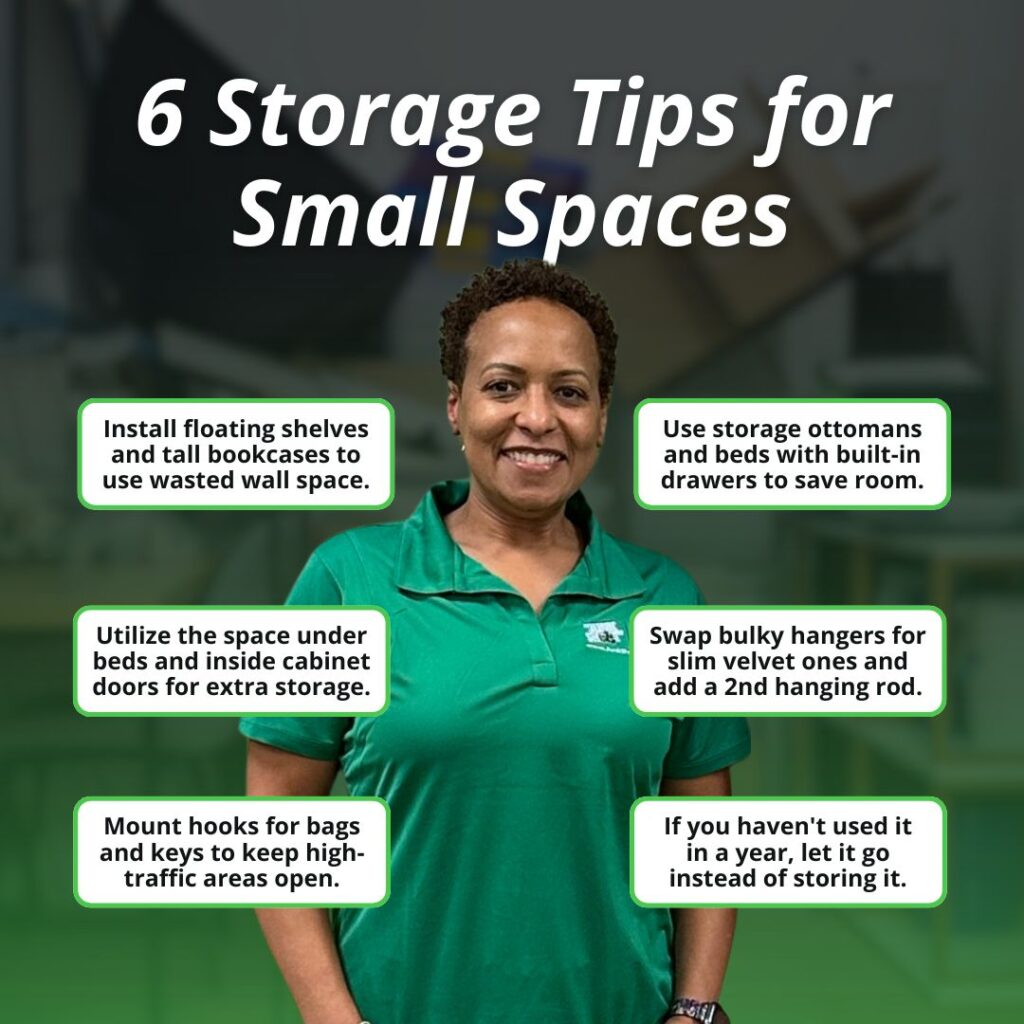
- Floating shelves above desks, toilets, and doorways
- Tall bookcases that reach toward the ceiling
- Over-the-door organizers for shoes, cleaning supplies, and pantry items
- Pegboards in kitchens, garages, and craft areas
- Wall-mounted hooks for bags, hats, and keys
In Tampa apartments and bungalows where closets tend to run small, vertical storage can nearly double your usable space. A simple set of floating shelves in a bathroom eliminates the need for bulky storage furniture while keeping everyday items accessible.
Find Furniture That Works Double Duty
Every piece of furniture in a small space should earn its spot. Choosing pieces that serve multiple functions reduces clutter while maintaining everything you need.
| Furniture Type | Storage Opportunity |
| Ottoman with lid | Blankets, games, seasonal items |
| Bed with drawers | Off-season clothing, linens, shoes |
| Coffee table with shelf | Books, remotes, magazines |
| Dining bench with storage | Table linens, entertaining supplies |
| Headboard with shelving | Books, phone, nightstand essentials |
If you’re furnishing a Tampa studio or one-bedroom, prioritize pieces that pull double duty before adding anything that only serves one purpose.
A storage ottoman replaces both a coffee table and a blanket chest. A bed frame with built-in drawers can eliminate the need for a dresser entirely.
Use Hidden and Underutilized Areas
Small homes have storage potential hiding in plain sight. These overlooked spaces often hold the key to staying organized without adding furniture.
Underutilized spaces worth claiming:
- Under the bed (use flat bins for shoes, linens, or off-season clothes)
- Inside cabinet doors (mount racks for spices, cleaning supplies, or lids)
- Above kitchen cabinets (store rarely used items in attractive baskets)
- Behind doors (hang organizers or hooks)
- Inside ottomans and benches (seasonal items, extra pillows)
The space under a standard bed can hold the equivalent of a small dresser’s worth of belongings. Door-mounted organizers turn wasted space into functional storage for everything from shoes to hair tools to cleaning products.
Smart Closet Organization
Closets in older Tampa homes weren’t designed for modern wardrobes. A single rod and shelf doesn’t cut it when you’re working with limited space.
Closet maximization strategies:
- Add a second hanging rod below the first for shorter items
- Use slim velvet hangers to fit more clothing
- Add hanging organizers for shoes, bags, or accessories
- Store off-season items in vacuum bags to compress bulk
A well-organized closet can hold twice what a chaotic one does. Before buying closet systems, though, ask yourself whether everything in there still belongs. Organizing items you don’t wear or use wastes both space and effort.
The Other Half of the Equation: Letting Go
Here’s where most storage articles stop. But if you’re constantly battling clutter despite trying every organizing hack, the real issue isn’t storage. It’s volume.
Small spaces require honest editing. The goal isn’t fitting everything you own into clever hiding spots. It’s keeping only what adds value to your daily life.
Signs it’s time to let go:
- You haven’t used it in over a year
- You’re storing it “just in case”
- It’s broken, and you haven’t repaired it
- You have duplicates serving the same purpose
- It doesn’t fit your current life, space, or style
- You feel stressed rather than happy when you see it
Letting go isn’t about deprivation. It’s about making room for what matters. That treadmill collecting dust, the boxes from your last move you still haven’t opened, the furniture that doesn’t fit your space: these things cost you more than they give.
Room-by-Room Decluttering Guide
Tackling an entire home feels overwhelming. Breaking it down by room makes the process manageable.
- Living room. Remove anything that doesn’t support relaxation or connection. Old magazines, broken decor, media you’ll never watch again, and furniture that crowds the space can all go.
- Bedroom. Focus on creating calm. Donate clothes that don’t fit or flatter, clear nightstands of clutter, and remove anything that doesn’t belong in a sleep space.
- Kitchen. Be ruthless with gadgets. If you haven’t used it in a year, someone else will. Expired pantry items, chipped dishes, and duplicate tools waste valuable cabinet space.
- Bathroom. Toss expired products, samples you’ll never use, and worn towels. Small bathrooms can’t afford to store things that don’t get used.
- Garage/storage areas. These spaces often become holding zones for postponed decisions. If you’ve been storing something for years without touching it, you have your answer.
What Do You Do With the Stuff You’re Letting Go Of?
Deciding to declutter is step one. Actually removing items from your home is where many people stall.
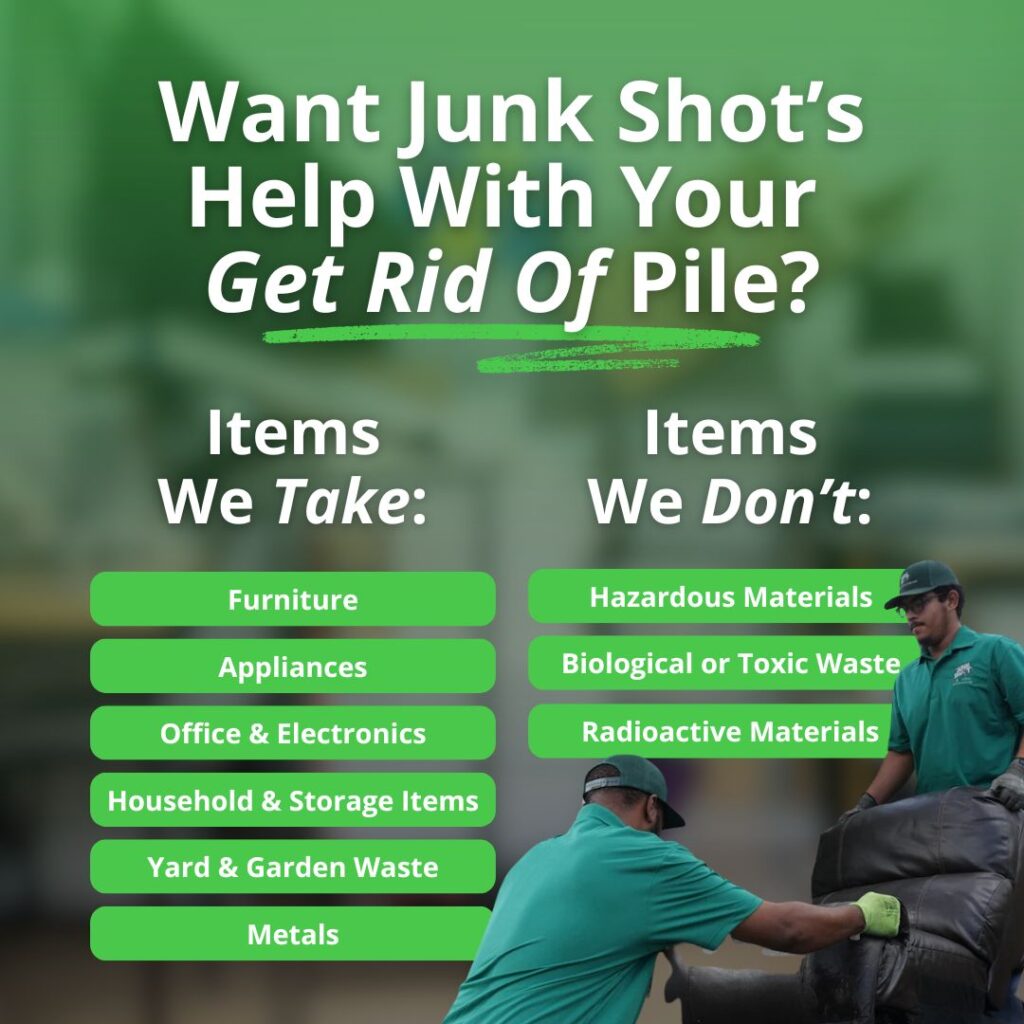
Options for items leaving your home:
- Donate: Goodwill, Habitat ReStore, and local shelters accept furniture, clothes, and household goods in good condition
- Sell: Facebook Marketplace, OfferUp, and garage sales work for items with resale value
- Recycle: Many items that can’t be donated can still be recycled properly
- Haul away: For large quantities, bulky items, or mixed loads, professional junk removal gets everything out at once
The longer unwanted items sit in your home, the less likely they are to leave. Scheduling a pickup or drop-off creates a deadline that drives action.
When Is DIY Not Enough?
Sometimes the decluttering job is bigger than a weekend project. Estate cleanouts, major downsizing, hoarding situations, and post-move purges often involve more volume than one person can handle alone.
Consider professional help when:
- You’re clearing out an entire home or estate
- Items are too heavy or bulky to move yourself
- You’re on a deadline for a move, sale, or renovation
- The volume requires multiple trips to donation centers and dumps
- You’d rather focus your time and energy elsewhere
Professional junk removal handles the heavy lifting, sorting, hauling, and disposal in one efficient process. Many items can be donated or recycled rather than landfilled, which matters if you care about where your stuff ends up.
Other Related Questions for Tampa Homeowners
How do I decide what to keep when downsizing?
Start with what you use daily and love genuinely. Work outward from there. If you’re moving to a smaller space, measure furniture before you move and let go of pieces that won’t fit rather than forcing them into your new home.
What’s the easiest way to handle an estate cleanout?
Estate cleanouts involve sorting and removing an entire home’s contents, often under time pressure. Most families find that a single full-service cleanout is faster and less stressful than coordinating donations, trash, and bulky items separately.
How do I get rid of old furniture in Tampa?
Furniture in good condition can go to donation centers, but many won’t accept damaged items. Large pieces are easiest to remove through junk hauling services that handle loading and disposal for you.
What should I do with yard debris after a storm?
Pile debris curbside away from storm drains and schedule removal promptly. Yard waste accumulates quickly after Tampa storms and can attract pests or code enforcement attention if left sitting.
Conclusion
Storage ideas for small spaces make things manageable, but it only works when paired with intentional decisions about what stays and what goes.
Vertical storage, multi-functional furniture, and creative use of hidden spaces all help. But the most powerful organizing tool is giving yourself permission to let go of what no longer serves you.
If you’re ready to reclaim your space and need help removing the stuff that’s been holding you back, get in touch with Junk Shot Tampa to schedule your pickup today.