If you are wondering how to dispose of LED light bulbs, it is important to know that they are recyclable, but should not go in your curbside recycling bin. LED bulbs contain small electronic components that require proper handling at a recycling facility. The good news is that recycling them is simple and often free.
If you recently switched to LED lighting, you already made a smart and energy-efficient choice. Disposing of your old bulbs the right way helps protect the environment and ensures those materials can be reused instead of ending up in a landfill.
Why Proper LED Light Bulb Disposal Matters
LED bulbs last longer and use less energy than older lighting types. Most LED bulbs last between 15,000 and 50,000 hours, which can equal 10 to 40 years in a typical home.
That extended life means fewer bulbs to dispose of over time, which benefits both households and the environment.
When they finally stop working, they still contain materials that should not be wasted.
Here is why proper disposal matters:
- Valuable materials can be reused
LED bulbs contain aluminum, copper, circuit boards, and small amounts of rare earth elements. Recycling allows these materials to be recovered and used again in new products. This reduces the need to mine new heavy metals and other resources.
- Electronic waste is growing rapidly
The world generates more than 50 million metric tons of e-waste each year. Recycling small electronics like LED light bulbs helps reduce that growing problem and keeps toxic materials from being released into the air and soil.
- Landfills waste usable resources
LEDs do not contain mercury like CFL bulbs, but their metal and plastic components can sit in landfills for decades. Recycling by professional teams keeps these materials in circulation instead of burying them underground.
Switching to LED lighting is already a smart environmental choice. Recycling them at the end of their lifespan completes the process responsibly.
Are LED Light Bulbs Recyclable?
Yes, LED light bulbs are recyclable!
However, they are not accepted in most curbside recycling programs. That is because they are considered electronic waste, also called e-waste. You should never place LED bulbs in your blue curbside recycling cart alongside items like paper and plastic bottles.
LED bulbs contain the following materials:
| Component | Why It Matters |
|---|---|
| Aluminum heat sinks | Can be melted down and reused in new metal products |
| Copper wiring | Valuable metal that can be recovered and recycled |
| Small circuit boards | Contain recoverable metals and electronic materials |
| Plastic and glass | Can be separated and processed for reuse |
| Rare earth elements in the diodes | Limited natural resources that are worth reclaiming |
These materials require specialized recycling facilities that can safely separate and process them. Some jurisdictions even consider LEDs universal waste due to trace amounts of heavy metals like lead or arsenic in their electronic contents.
So while you cannot toss them in your blue bin, you can recycle them through the right channels.
How to Dispose of LED Light Bulbs: Step by Step
Disposing of LED bulbs is easier than most people think. Follow these simple steps to properly dispose of your old light bulbs.
Step 1: Make Sure the Bulb Is Truly Burned Out
Before you recycle it, test the bulb in another fixture.
Sometimes the issue is:
- A loose socket
- A faulty switch
- An incompatible dimmer
If the bulb still works, consider:
- Keeping it as a spare
- Donating it to a school or local charity
- Offering it to a neighbor
Working bulbs still have value and can provide years of additional life for someone else.
Step 2: Find a Local LED Bulb Recycling Location
Once you confirm the bulb no longer works, find a recycling drop-off location.
Common options include:
- Retail Stores: Many major home improvement and hardware stores offer free in-store recycling for LED bulbs.
- Batteries Plus Bulbs also accepts LED light bulbs for recycling at most locations. Check with your local store to confirm participation and hours before making a trip.
- County or City Recycling Centers: Most municipalities operate electronics or household hazardous waste facilities that accept LED bulbs. Hazardous waste drop-off programs may accept LED bulbs at municipal recycling centers even though LEDs are not technically hazardous.
These facilities serve multiple households in the community and can handle larger quantities.
- Online Search Tools: Websites like Earth911 and Call2Recycle allow you to search by ZIP code. Simply type in “LED bulbs” and your location to find the nearest recycler.
- Mail-Back Programs: Pre-paid mail-in kits for recycling LED bulbs are available from companies like LampMaster EasyPak and BulbCycle. These programs are especially helpful for rural areas or when you need to dispose of items like LED string lights alongside regular bulbs.
Always call ahead to check whether they still accept LEDs and confirm their hours.
Step 3: Package Bulbs Safely for Transport
LED bulbs are not hazardous, but broken glass can cause injury.
For safe transport:
- Keep bulbs in original packaging if possible
- Wrap LED bulbs in paper or a sealed bag before disposal to prevent glass breakage
- Wrap them in newspaper or bubble wrap for extra protection
- Place them in a sturdy box
- Label the box “Used Light Bulbs.”
If you have a broken LED bulb, handle it carefully. Use gloves to collect shards and seal them in a container before taking them to a recycling facility.
If you are disposing of different bulb types, keep LEDs separate from CFL or fluorescent bulbs. Compact fluorescent light bulbs (CFLs) contain mercury and should not be thrown in the trash, so mixing them with LEDs can create confusion during sorting.
Step 4: Consider Bulk Disposal for Large Cleanouts
If you are replacing lighting throughout your entire home, you may have dozens of bulbs.
Bulk disposal makes sense if you are:
- Renovating a home
- Clearing out an estate
- Moving
- Upgrading office lighting
Instead of making multiple trips to recycling centers, professional junk removal services can handle everything at once.
For example, if you are already removing old fixtures, appliances, or furniture, it may be easier to schedule a full pickup. Services like Junkshot ensure items are sorted and recycled properly whenever possible.
LED Light Bulbs vs Other Light Bulb Types: Disposal Differences
Not all light bulbs are handled the same way. Understanding how to dispose of different types of light bulbs helps protect human health and the environment.
Here is a quick comparison:
LED Bulbs
- Recycling preferred
- No mercury
- Classified as electronic waste
- Safe for households to handle
CFL Bulbs (Compact Fluorescent)
- Must be recycled
- Contain mercury
- Never place in the trash
- Broken CFLs require special cleanup
- Should be recycled using community recycling options or mail-in programs
Fluorescent Bulbs and Fluorescent Light Tubes
- Must be professionally recycled
- High mercury content
- Can be hazardous if broken
- Mercury in light bulbs can pollute the air and water if they are improperly disposed of
- Fluorescent bulbs contain mercury and should not be placed in curbside recycling or trash carts
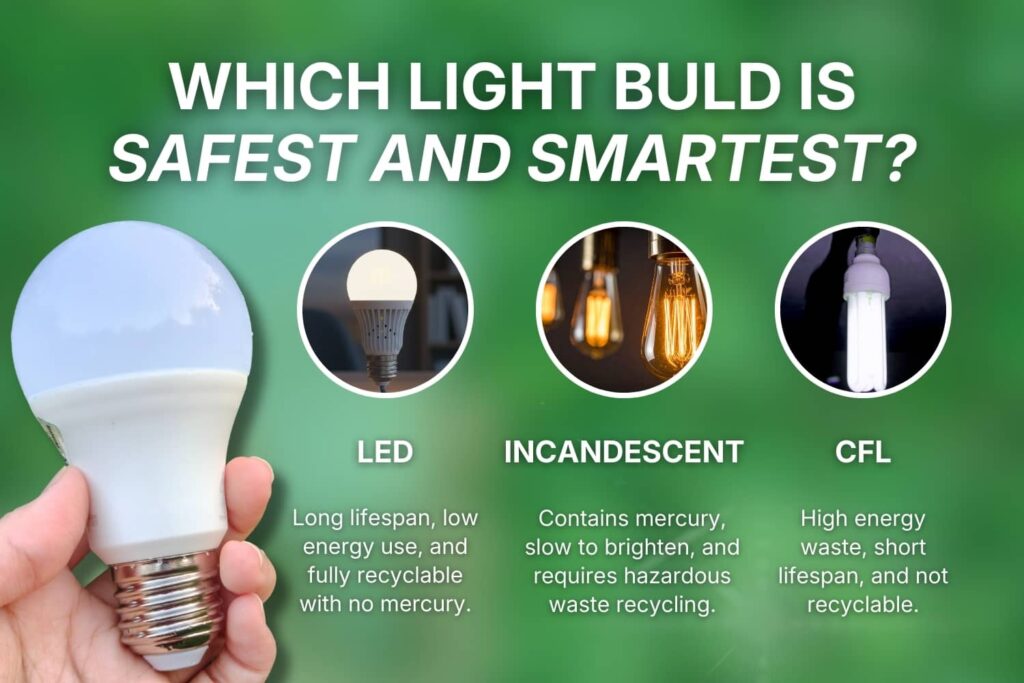
Incandescent Light Bulbs
- Can go in regular trash
- Not recyclable in most programs
- No hazardous materials
- Incandescent light bulbs can be thrown in the regular trash because they do not contain hazardous materials
Halogen Bulbs
- Can be disposed of in regular trash
- No mercury or hazardous content
- Halogen bulbs can also be disposed of in the regular trash once they are no longer functional
LED bulbs are the safest and most environmentally friendly option overall. They use less energy during their lifespan and are easier to dispose of safely compared to compact fluorescent lamps or fluorescent tubes.
What Not to Do When Disposing of LED Bulbs
Recycling LED bulbs is simple, but a few common mistakes can prevent them from being processed correctly. Knowing what to avoid helps protect workers, improve recycling results, and reduce unnecessary landfill waste.
Here are the most important things not to do:
- Do not place LED bulbs in curbside recycling bins: Standard recycling facilities are not designed to handle electronic components.
- Placing LEDs in your blue bin can contaminate the recycling stream and cause similar problems as throwing batteries or other electronics in with paper and plastic.
- Do not crush or break the bulbs: Broken bulbs are harder to process and may create safety risks during transport and handling.
- If you accidentally break a bulb, wrap the shards carefully before disposal.
- Do not mix them with hazardous waste: LED bulbs are not hazardous like CFLs, but mixing materials makes sorting more difficult and can slow down proper recycling.
- Keep LED light bulbs separate from compact fluorescent light bulbs and other mercury-containing items.
- Do not ignore local disposal guidelines: Some cities or counties have specific rules for electronics recycling.
- Checking your local waste management website can help you avoid problems and ensure you follow EPA guidelines where applicable.
- Do not throw LED string lights in regular bins: LED string lights should not be thrown in the trash or curbside recycling bins because they can get tangled in machinery at sorting facilities.
- Take them to a dedicated e-waste drop-off location instead.
When in doubt, treat LED light bulbs like small electronic devices. Handle them carefully and take them to a proper recycling facility for the best results.
Related Questions
Do LED Light Bulbs Contain Hazardous Materials?
LED bulbs do not contain mercury, which makes them safer than CFL and fluorescent bulbs. While they include small amounts of metals and electronic parts, these materials are not considered hazardous in normal household use.
What other items require special disposal during home cleanouts?
Electronics, appliances with refrigerants, paint, batteries, and mattresses all require proper disposal beyond regular trash. Professional junk removal services handle sorting and ensure items reach appropriate recycling or disposal facilities.
Can junk removal services handle renovation debris?
Yes, professional services remove construction materials, old fixtures, flooring, and lighting during renovations. They sort recyclable materials from general waste, making large-scale projects more manageable than multiple DIY trips.
How should I prepare items for junk removal pickup?
Gather items in an accessible location, separate hazardous materials if possible, and remove personal belongings. Most services handle loading and sorting, but preparation speeds up the process and may reduce costs.
Conclusion
LED light bulbs are recyclable and should be handled as electronic waste, not placed in curbside recycling. For a few bulbs, simply confirm they no longer work, package them safely, and drop them off at a local recycling facility.
If you are dealing with a larger project like a renovation, estate cleanout, or full lighting upgrade, professional removal can save time and effort. Junkshot Pasco-Pinellas handles hauling and prioritizes responsible disposal, making it easy to clear out old bulbs and other unwanted items in one simple pickup.