
Cleaning up tree debris after a storm, trimming, or a big project is about more than keeping your yard neat. Tree branches, leaves, and stumps left behind can create safety risks, damage your lawn, and get in the way of everyday life on your property.
For homeowners, landlords, and commercial property managers across Pinellas County and nearby areas, handling tree debris the right way keeps walkways clear, parking areas safe, and outdoor spaces ready to use again fast.
Partnering tree debris removal with smart junk removal, yard waste cleanup, and even construction or estate cleanouts can help you reclaim your space without the stress
Why Tree Debris Removal Matters More Than You Think
Tree branches, leaves, and stumps can pile up fast and turn into more than just a weekend cleanup job. Left alone, they can attract pests, create tripping hazards, and even cause issues with drainage around your home or building.
For homeowners and commercial property owners, staying ahead of tree debris helps:
- Protect walkways, parking areas, and entry points from hazards
- Keep curb appeal high for guests, tenants, or customers
- Reduce the risk of code violations or HOA complaints
Mistake 1: Waiting too long to clean up
One of the biggest mistakes is letting tree debris sit for weeks or months. After storms or routine trimming, it is tempting to “get to it later,” but that delay usually makes the job harder and more expensive.
Here is what can happen when debris is left too long:
- Branches get heavier as they absorb moisture, making them harder to move
- Piles of leaves trap water and can damage grass or landscaping
- Rotting wood attracts insects and small animals that you do not want near your home or building
If tree work is done near walkways, driveways, or parking areas, make cleanup part of the plan from day one. Aim to clear debris within a few days, especially in high-traffic areas.
Mistake 2: Ignoring safety gear and safe lifting
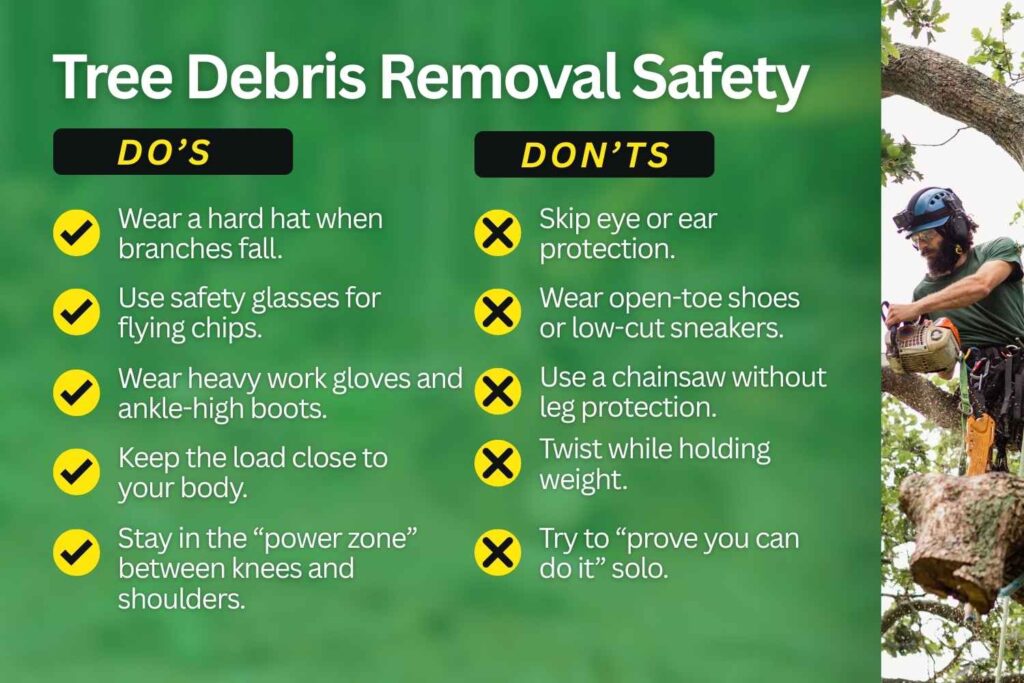
Another common mistake is jumping into tree debris removal without basic safety gear. Even small branches can have sharp edges, splinters, or hidden metal, like nails or wire from old supports.
To stay safe while you clean up, make sure to:
- Wear heavy-duty work gloves to protect from cuts and splinters
- Use closed-toe shoes or boots with good traction
- Wear safety glasses if you are cutting branches down to size
Safe lifting is just as important as safety gear. Bend your knees, keep the branch close to your body, and avoid twisting while you lift. For large logs or heavy sections of trunk, do not try to be a hero.
Break them down into smaller pieces or bring in a crew with the right equipment.
Mistake 3: Piling debris where it causes drainage problems
Many property owners drag branches and leaves to the “out-of-the-way” spot in the yard, only to find puddles, mud, or standing water later. When tree debris blocks natural water flow, it can lead to drainage problems around your foundation, driveway, or parking lot.
Avoid these issues by:
- Keeping debris piles away from gutters, drain lines, ditches, and low spots
- Not stacking branches against fences, sheds, or buildings
- Leaving clear paths for rainwater to move away from your home or structure
If your property already has drainage challenges, plan debris removal quickly and keep piles small and temporary.
Mistake 4: Overloading your trash or dumpsters
It can be tempting to cram tree debris into your residential trash cans or commercial dumpsters. The problem is that branches and logs are bulky, heavy, and often not accepted in regular trash in large amounts.
Overloading trash or dumpsters can:
- Cause damage to the container or lid
- Lead to extra fees if the hauler has to leave it or re-load it
- Violate local waste rules in your city or county
A better approach is to separate green waste and bulky debris from regular trash and use a junk removal or yard waste service that can handle it in one trip.
Mistake 5: Using the wrong tools or equipment
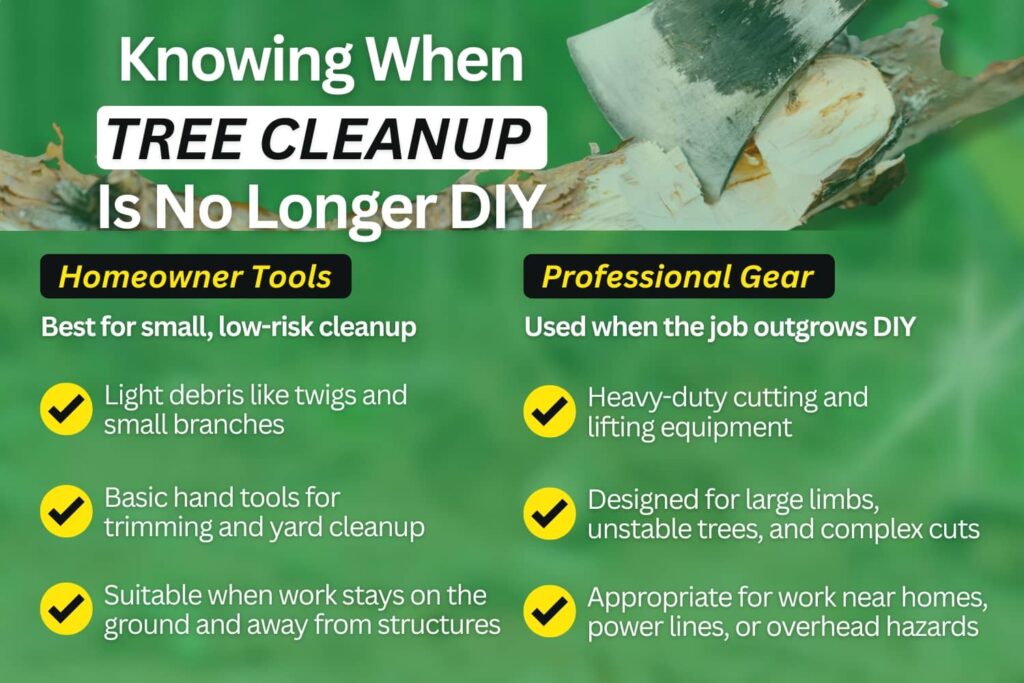
Trying to handle tree debris with the wrong tools can slow you down and increase the risk of injury. A dull saw, lightweight rake, or small residential trailer often cannot keep up with heavy branches or large piles.
Common equipment mistakes include:
- Using a chainsaw without proper training or safety gear
- Cutting branches on uneven ground where you could trip
- Loading heavy pieces into vehicles not built for that weight
If you find yourself needing power tools or multiple trips to the dump, it may be time to call a professional team with trucks, trailers, and the right lifting equipment.
Having your tools organized and ready can make the job safer and faster
Mistake 6: Burning tree debris without checking local rules
In some areas, people still consider burning branches and brush as a quick solution. The problem is that open burning is often restricted or banned, especially in dense neighborhoods or commercial areas.
Burning tree debris can:
- Create fire risks close to homes, fences, and structures
- Lead to smoke complaints from neighbors or nearby businesses
- Result in fines if burning is not allowed in your area
Always check local rules, HOA guidelines, or city websites before considering any kind of open burning. In many cases, a junk removal or yard waste service is safer, faster, and fully compliant.
Mistake 7: Forgetting about stumps and hidden roots
Even after branches and logs are gone, many properties are left with stumps and surface roots that create long-term problems. They can be tripping hazards, damage lawn equipment, and make mowing or landscaping harder.
You have a few options for dealing with stumps:
- Leave small stumps low to the ground and mark them clearly
- Have stumps ground down so the area can be leveled and replanted
- Remove large or problem stumps completely with professional help
Ignoring stumps now often leads to frustrations later when it is time to mow, add new plantings, or improve your outdoor space.
Mistake 8: Not planning for different property types
Tree debris removal looks different on a small residential lot compared to a busy commercial property. Treating both the same way is a mistake that can cause safety issues or business interruptions.
For homeowners, the focus is usually:
- Keeping walkways, driveways, and patios clear
- Protecting kids and pets from sharp branches or stumps
- Maintaining a clean, comfortable outdoor space
For commercial owners or managers, priorities often include:
- Keeping parking lots and sidewalks safe for customers and staff
- Making sure entryways stay clear and professional-looking
- Proper planning to minimize downtime or blocked areas during removal
Planning around peak business hours, delivery times, and tenant needs can turn a messy cleanup into a smooth, low-stress project.
When to call a professional for tree debris removal
There is a point where a “quick cleanup” becomes an all-day project with heavy lifting, piles of branches, and extra fees at the dump. That is usually the best time to bring in a professional team.
Consider calling a tree debris removal or junk removal service when:
- You have a full driveway or curb line of branches and logs
- There are large limbs or sections of the trunk that are hard to move
- You do not have a truck or trailer that can safely haul the load
- You are managing a commercial property and need the area cleared fast
A professional crew can load, haul, and dispose of the debris in one trip, often on the same day, so your property gets back to normal quickly.
Related Questions
Can I leave smaller branches and leaves to break down naturally?
In some areas of your yard, you can leave a thin layer of leaves or small branches to decompose, especially away from walkways and structures. Just avoid thick, wet piles that can attract pests or damage your lawn.
Is professional tree debris removal worth it for small jobs?
For small piles you can load in a few bags, DIY is usually fine. But if you fill up your driveway, curb, or parking spaces with branches and logs, professional removal often saves time, multiple trips, and heavy lifting
How soon should I schedule tree debris removal after a storm?
Aim to schedule storm cleanup within a few days if branches are blocking driveways, walkways, parking areas, or entrances. For large trees or structures that may be damaged, call a pro right away to assess safety.
Conclusion
Tree debris removal becomes much easier when you avoid common mistakes like delaying cleanup, blocking drainage, or overloading your trash service.
Paying attention to safety, planning where the debris will go, and choosing the right kind of help for the size of the job keeps your yard, driveway, or parking areas safer and more usable.
If you are in Pinellas County or nearby and dealing with tree debris along with other clutter from a move, renovation, or cleanout, it can be helpful to handle everything in one go instead of in separate trips. Contact Junk Shot today to schedule your debris removal and property cleanout