Storm season in Central Florida means downed branches, scattered palm fronds, damaged fencing, and piles of debris across your property. Preparing your yard before debris removal crews arrive saves time, reduces costs, and gets your Orlando property back to normal faster.
Whether you’re dealing with the aftermath of a hurricane, severe thunderstorm, or tropical system, proper preparation makes the cleanup process smoother for everyone involved.
Why Does Preparation Matter Before Debris Removal?
Debris removal crews work most efficiently when they can access materials easily and know exactly what needs hauling away.
Taking time to prepare your property before they arrive speeds up the process and helps you avoid additional trips or charges.
Florida storms create unique debris challenges:
- Palm fronds and tropical vegetation that pile up quickly
- Heavy tree limbs from oaks and pines are common in Orlando neighborhoods
- Damaged outdoor furniture and lawn equipment
- Roof materials like shingles or tiles
- Fencing sections torn loose by high winds
The faster debris gets removed, the sooner you can assess other damage, file insurance claims, and start repairs. Many Orlando homeowners underestimate how much storm debris accumulates until they start sorting through it.
Proper preparation also protects your property from additional damage. Debris left sitting can damage grass, create breeding grounds for mosquitoes (a serious concern in Central Florida), or block drainage that could lead to flooding during the next rain.
Sort and Separate Your Debris
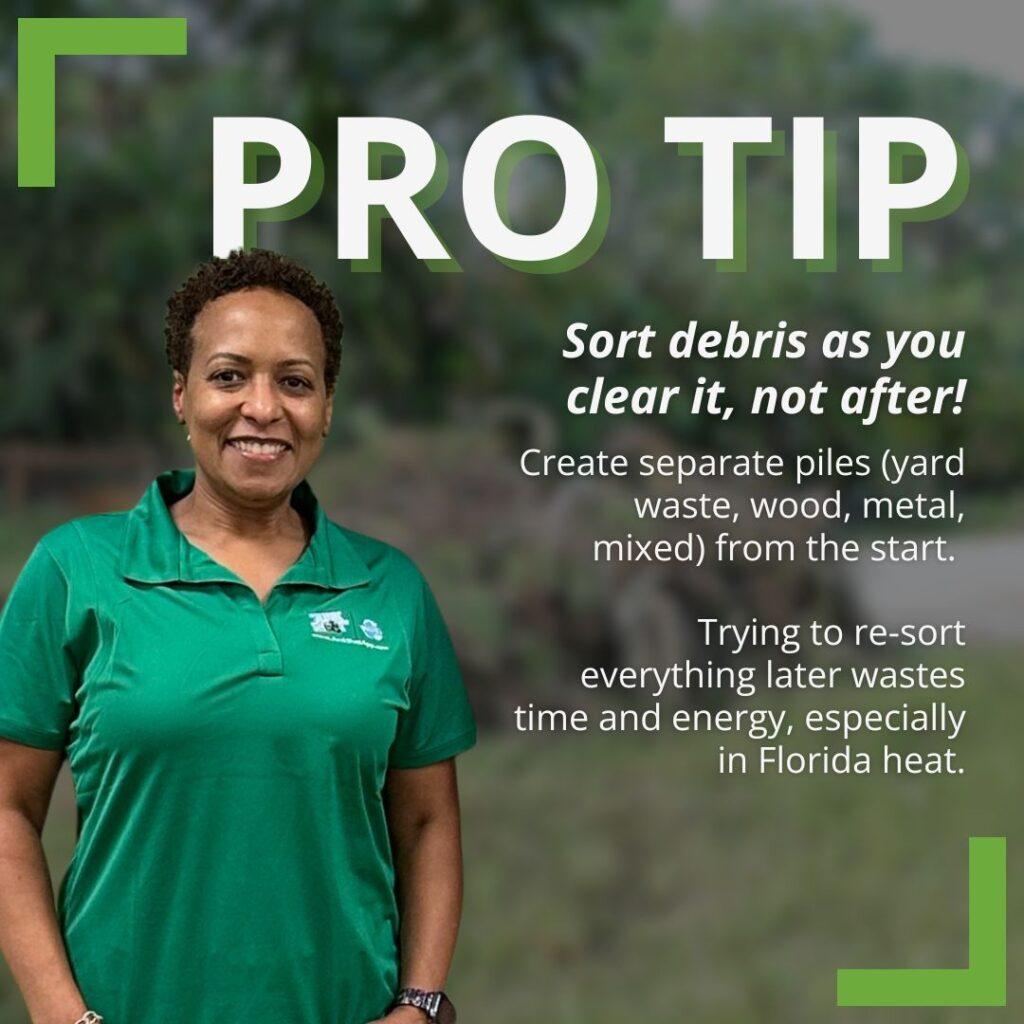
Debris removal goes faster when materials are already sorted. Most removal services handle different debris types separately, so organizing piles before crews arrive saves time and money.
Create separate piles for:
- Yard waste: branches, leaves, palm fronds, grass clippings
- Wood materials: lumber, fencing, tree trunks, construction wood
- Metal items: damaged gutters, fence posts, outdoor equipment
- Mixed debris: damaged furniture, tarps, general storm waste
Keep piles at least three feet apart so crews can access them with equipment. Don’t mix categories because it slows down loading and might require sorting fees.
For larger trees or limbs, cut them into manageable sections if you can do so safely. Most removal services prefer branches under eight feet long and trunks cut into rounds. This isn’t always possible after major storms, but it helps when you can manage it.
Special considerations for Orlando properties:
Hurricane debris often includes palm fronds, which are heavy and bulky. Stack these separately from other yard waste.
If you have damaged screening from pool enclosures (common in Orlando homes), bundle and separate this from other materials.
Clear Access Points and Pathways
Debris removal trucks and equipment need clear access to reach your piles. Walk your property and identify the best route from the street to each debris location.
Check for obstacles that could block equipment:
- Parked cars in driveways or along the curb
- Low-hanging branches that survived the storm
- Gates that need opening or removing
- Decorative landscaping that could get damaged
- Sprinkler heads or irrigation lines near debris piles
If your debris sits in the backyard, make sure the gates are wide enough for equipment. Standard wheelbarrows and carts need at least 36 inches of clearance. Some crews use small loaders that require wider access.
For properties with limited access, place debris as close to the street as your HOA or city regulations allow. Many Orlando neighborhoods have specific rules about debris placement during storm cleanup, so check local guidelines.
Mark any hidden hazards like septic systems, underground utilities, or irrigation controls near debris piles. Crews need to know where they can safely drive or walk heavy equipment.
Document Everything for Insurance
Storm damage often involves insurance claims. Take detailed photos and notes before debris removal begins to support your claim and prove what was damaged.
Document thoroughly:
- Wide shots showing debris placement and overall damage
- Close-ups of specific items (damaged fences, destroyed furniture, fallen trees)
- Any structures affected by fallen debris
- Roof damage or compromised buildings
- Date and time stamps for all documentation
Create a written inventory listing what’s being removed. Include descriptions, approximate sizes, and original value when possible. This matters especially for expensive outdoor items like furniture, grills, or playground equipment.
Contact your insurance company before scheduling removal if you’re filing a claim. Some insurers want to inspect damage before debris disappears. Others are fine with photo documentation, but it’s better to confirm first.
Keep all receipts from debris removal services. Insurance companies typically reimburse reasonable cleanup costs, and receipts prove what you spent.

Know What Can and Can’t Be Removed
Not everything goes in the debris pile. Understanding what removal services accept prevents delays and ensures proper disposal of hazardous materials.
Standard debris removal typically includes:
- Tree branches, limbs, and stumps
- Yard waste and vegetation
- Damaged fencing and outdoor structures
- Non-hazardous construction materials
- Outdoor furniture and equipment
- Appliances (with proper handling)
Items requiring special handling:
- Hazardous materials: paint, chemicals, pesticides, fuel
- Electronics: computers, TVs, monitors (need e-waste recycling)
- Tires: separate disposal required
- Concrete and masonry: heavy materials might need dedicated hauling
- Refrigerators and AC units: require coolant removal first
If your storm debris includes materials from home damage (roof tiles, siding, drywall), mention this when scheduling. Construction and demolition debris sometimes requires different handling than yard waste.
For electronics damaged by water or wind, ask about e-waste recycling services. Keeping these items out of landfills protects the environment and follows proper disposal regulations.
Schedule Removal at the Right Time
Timing matters for debris removal after storms. Orlando experiences high demand for cleanup services following hurricanes and severe weather, so schedule as soon as you can assess your needs.
| Timeline | Action |
| Immediately after storm | Assess safety, check for hazards |
| Within 24-48 hours | Document damage, start sorting debris |
| Within 3-5 days | Contact removal services, get quotes |
| Within 1 week | Schedule removal before mosquito issues develop |
Many removal companies offer emergency services after major storms, but operate on a first-come basis. The sooner you call, the faster you get on the schedule.
Be realistic about timing expectations. After significant hurricanes, every property in Orlando needs cleanup. Services work as quickly as possible, but high demand means some waiting.
Preparing your debris thoroughly moves you through the queue faster when crews arrive.
Consider weather windows between storm systems. Florida’s summer and fall often bring multiple weather events close together. Getting debris removed before the next system arrives prevents new damage and keeps your property safer.
Stay Safe During Debris Preparation
Storm debris creates serious safety hazards. Take precautions while sorting and preparing materials for removal.
Safety priorities:
- Wear heavy gloves, long pants, and closed-toe shoes
- Watch for exposed nails, sharp metal edges, and broken glass
- Never touch downed power lines (call FPL immediately)
- Avoid standing water near debris (electrical hazards and contamination risks)
- Use proper lifting techniques for heavy branches or materials
- Work during daylight hours when visibility is good
Be especially careful with storm-damaged trees. What looks stable might have compromised roots or cracked trunks ready to fall. If you’re unsure about a tree’s stability, leave it for professionals.
Standing water around debris piles can hide sharp objects, create slipping hazards, and harbor mosquitoes within days. If possible, improve drainage around debris until removal happens.
Watch for wildlife that might shelter in debris piles. Snakes, rodents, and insects often hide in brush piles and downed trees. Make noise and give creatures time to leave before moving materials.
Related Questions
How long can storm debris sit before removal?
Try to schedule removal within one week. Debris left longer attracts pests, damages grass underneath, and makes mosquito problems worse in Florida’s humid climate. Some HOAs also have time limits for visible debris.
Can I handle small debris myself?
For minor cleanup, you might bag leaves and small branches for regular yard waste collection. Larger volumes overwhelm standard waste services and need professional removal to avoid multiple weeks of curbside piles.
What if I have debris inside my home?
Water-damaged furniture, carpet, and contents need removal too. Junk Shot Orlando can handle interior cleanouts along with exterior work, helping you clear everything in one appointment.
When to Get Professional Removal
Professional services have equipment that makes quick work of debris that would take homeowners days or weeks to handle.
They know proper disposal methods for different materials and can handle volumes that regular waste services won’t collect.
Call Junk Shot when:
- Debris volume exceeds what fits in a few trash bags
- You have heavy items like tree trunks or large branches
- Storm damage includes hazardous materials
- Damaged structures need demolition debris removal
- You can’t safely move materials yourself
- Time is critical for insurance claims or repairs
Junk Shot Orlando handles more than just storm debris. Whether you need yard waste removal, construction cleanup, estate cleanouts, or general junk hauling, professional service gets your property cleared efficiently so you can move forward with repairs and recovery.
Conclusion
Storm debris removal requires preparation, safety awareness, and realistic timing expectations. Sorting materials, clearing access routes, documenting damage, and understanding what can be removed sets you up for efficient cleanup.
The faster you prepare, the sooner crews can clear your property and let you focus on repairs and insurance claims. Don’t let debris sit and create additional problems when professional removal gets you back to normal quickly.
If your Orlando property needs debris removal after a storm or for any other reason, call Junk Shot Orlando for fast, professional service for everything from yard waste to construction materials.