A foreclosure cleanout is the process of removing furniture, appliances, debris, and leftover belongings from a property after a foreclosure. It is one of the first steps that real estate agents, banks, investors, and property managers take before a foreclosed home can be listed, renovated, or resold.
If you are dealing with a foreclosed property in Pasco County, understanding how the process works can save you time, money, and a lot of stress.
Why Foreclosure Cleanouts Are Common in Pasco County
Pasco County is one of the most active foreclosure markets in the entire state.
Florida currently ranks number one in the nation for foreclosure rate, with roughly one in every 230 housing units filing for foreclosure in 2025.
The Tampa metro area, which includes Pasco County, has the highest foreclosure rate of any major U.S. metro with over one million people. Cities like Spring Hill, New Port Richey, Hudson, Zephyrhills, and Wesley Chapel are among the most active foreclosure hotspots in the county.
Florida’s judicial foreclosure process is part of what drives the volume. Every foreclosure must move through the court system, and the average timeline runs eight to fourteen months for uncontested cases. Properties often sit vacant for one to three years before they change hands, leaving them in rough shape by the time a new owner takes possession.
Rising homeowner insurance costs are also a contributing factor. The result is a growing pipeline of properties that need professional foreclosure cleanout services in Pasco County.
What Does a Foreclosure Cleanout Include?
Not every foreclosed property looks the same when a new owner takes possession. Some are mostly empty while others are packed with furniture, appliances, and years of accumulated debris. Here is a look at what a professional foreclosure cleanout typically covers.
Items commonly removed during a foreclosure cleanout include:
- Furniture such as sofas, beds, dressers, and dining sets
- Appliances, including refrigerators, washers, dryers, and stoves
- Personal belongings left behind by former occupants
- General trash, food waste, and household debris
- Yard waste, overgrown landscaping, and outdoor clutter
- Construction debris, old flooring, and leftover building materials
- Hazardous items such as paint cans, chemicals, and propane tanks
One thing worth noting is what the industry calls foreclosure stripping. This is when former owners remove fixtures, copper wiring, ceiling fans, or appliances before vacating. It is more common than most people expect and can add complexity to an otherwise standard home cleanout.
Industry data suggests that more than 70% of foreclosed properties require professional debris removal before they are ready to list. That number reflects just how often these properties are left in poor condition by the time ownership changes hands.
The Foreclosure Cleanout Process
Whether you are a realtor trying to get a property market-ready or an investor preparing for renovation, knowing what to expect helps everything run more smoothly. Here is how a professional foreclosure cleanout typically unfolds from start to finish.
- Property assessment and photo documentation — The crew walks the property and documents its current condition with photos before anything is touched.
- Identifying items to remove, retain, or donate — Usable items are sorted for donation or recycling. Trash and debris are separated for disposal.
- Bulk item and furniture removal — Large items like sofas, mattresses, and appliances are removed first to open up space.
- General debris and trash hauling — All remaining waste is loaded and hauled away.
- Yard waste and exterior cleanup — Outdoor areas, including driveways, patios, and landscaping, are cleared.
- Hazardous material handling — If chemicals, paint, or other regulated materials are present, they are handled and disposed of according to local requirements.
- Final sweep and before/after photo documentation — The property is reviewed one last time, and a full photo record is completed.
For banks, asset managers, and REO agents, the final documentation step carries real weight. Date-stamped before and after photos support compliance reporting requirements for HUD, VA, Fannie Mae, and Freddie Mac.
This level of documentation separates professional estate cleanout services from general haulers who may not keep records of their work.
Who Needs a Foreclosure Cleanout in Pasco County?
Foreclosure cleanout services are not limited to one type of customer. Several different groups in Pasco County rely on these services regularly. Here is a breakdown of who typically needs them and what matters most to each.
| Who | Why They Need It | Key Priorities |
|---|---|---|
| Real Estate Agents | Prepare listings and improve marketability | Speed, curb appeal, reliable scheduling |
| Banks and Lenders | Reduce carrying costs and meet compliance requirements | Documentation, HUD/VA compliance, insurance |
| Investors and Flippers | Clear properties before renovation begins | Cost efficiency, fast turnaround, bulk pricing |
| Property Managers | Handle eviction cleanouts and minimize vacancy time | Recurring service, multi-unit capability |
| Homeowners | Clear personal belongings and reduce legal exposure | Respectful service, affordability |
To put this in perspective, consider a scenario common in Pasco County. Say an investor purchases a foreclosed home in New Port Richey at a 30% discount below market value.
Before any renovation can begin, the property needs a full cleanout of old furniture, broken appliances, yard debris, and belongings left by the previous occupant.
How Much Does a Foreclosure Cleanout Cost in Pasco County?
Cost depends on the size and condition of the property. A small home with minimal debris will cost far less than a large property that has sat vacant for two or three years.
Here is a general cost framework to help you plan.
| Property Condition | Estimated Cost Range |
|---|---|
| Small property, minimal debris | $500 – $1,500 |
| Average home, moderate debris | $1,500 – $3,000 |
| Large or heavily cluttered property | $3,000 – $5,000+ |
| Hazardous materials present | Additional fees vary |
Several factors influence where a specific job lands within these ranges. Those include square footage, volume, and weight of debris, whether hazardous materials are present, the accessibility of the space, and whether a faster turnaround is needed.
Getting a photo-based quote upfront is the most reliable way to understand your actual cost before committing. If you are still comparing your options, our guide on how to choose a junk removal service covers what to look for when evaluating providers.
You can also learn more about Junk Shot’s removal pricing here!
What to Watch Out For During a Foreclosure Cleanout in Florida
Florida adds a few layers of complexity that are worth understanding before a cleanout begins. Being aware of these issues ahead of time can protect you from legal liability and unexpected costs.
Here are the most important things to watch for when managing a foreclosure cleanout in Pasco County:
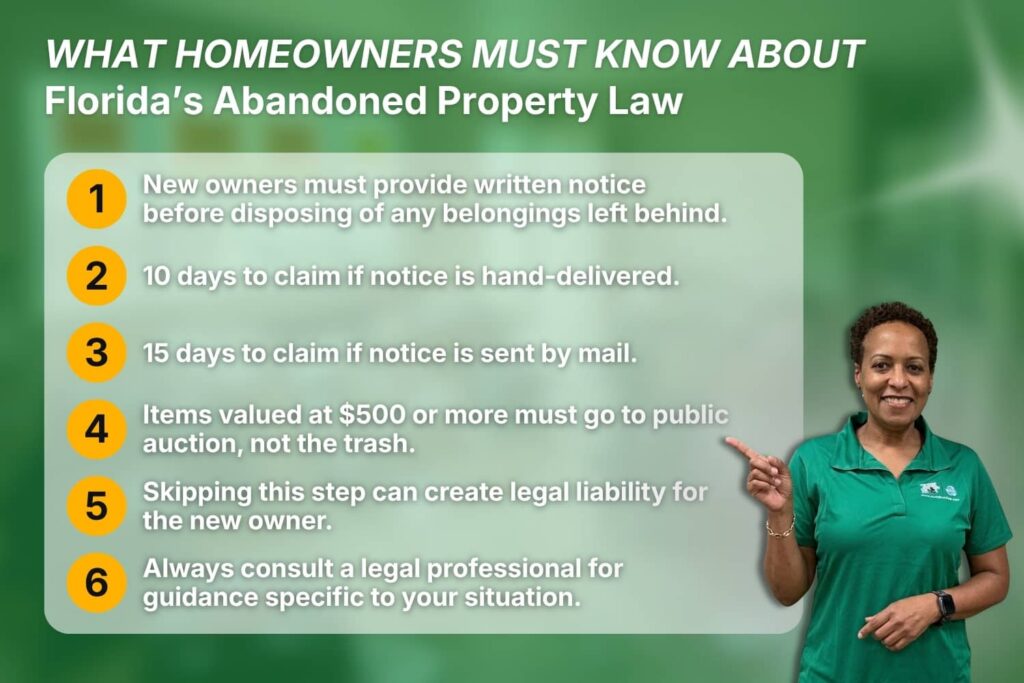
- Florida’s abandoned property law — Under Florida Statutes Chapter 715, new property owners must provide written notice before disposing of any belongings left behind. Former occupants have 10 to 15 days to claim their items. If the value of the abandoned property exceeds $500, it must be sold at public auction rather than discarded.
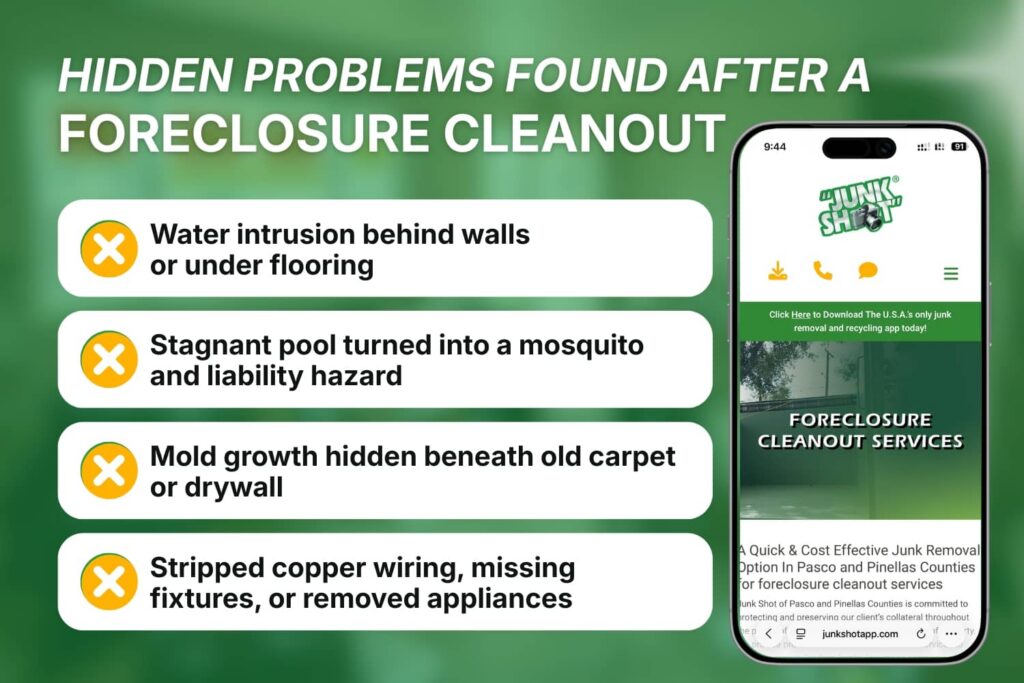
- Mold and moisture damage — Homes that sit vacant in Florida’s humid climate can develop mold within weeks. It spreads quickly behind walls and under flooring and should be identified before a cleanout begins.
- Pest infestations — Rodents, termites, and cockroaches move into vacant properties quickly. Pasco County’s average home age of 31 years makes this a frequent issue.
- Foreclosure stripping — Fixtures, copper wiring, and appliances are sometimes removed by the former occupant. Documenting the property’s condition before and after the cleanout helps protect against disputes.
- Stagnant swimming pools — Pools left unattended become health hazards and mosquito breeding grounds. They also create liability exposure for the new owner under Florida law.
- Hidden structural damage — Debris and clutter can conceal water intrusion, roof damage, and foundation issues. A cleanout often reveals problems that were not visible during the initial walkthrough.
If the cleanout uncovers storm-related damage or significant outdoor debris, Junk Shot’s storm cleanup and debris removal service can help as a follow-up step.
Professional vs. DIY: What Makes More Sense for a Foreclosure Cleanout?
Some property owners attempt to handle a foreclosure cleanout on their own to save money. In practice, the time and carrying costs involved often make the DIY approach more expensive than it first appears.
Every day a foreclosed property sits unsold costs the owner an estimated $2,500 to $4,000 per month in mortgage payments, insurance, taxes, and utilities. A professional team can complete most cleanouts in one to three days, while a DIY effort can stretch into weeks.
There are also compliance and documentation considerations that matter to banks and REO agents. Proper recordkeeping, hazardous material handling, and responsible disposal all require experience and the right equipment.
Our post on junk removal planning during a property transition covers the preparation process in more detail.
Related Questions
Who is responsible for cleaning out a foreclosed property in Florida?
Once the title transfers, the new owner is responsible for the property and its contents. Florida law requires written notice to former occupants before their belongings can be disposed of, so understanding the legal requirements before starting is important.
Can items from a foreclosure cleanout be donated or recycled?
Yes. Usable furniture and appliances can often be donated to organizations like Goodwill or Habitat for Humanity ReStores. A responsible cleanout service will sort items and divert as much as possible from the landfill.
Do I need a permit for a foreclosure cleanout in Pasco County?
In most cases, no permit is required for standard debris and junk removal. Hazardous materials require proper handling by a licensed provider. If the project involves structural work like demolition, separate permits may apply.
Does Junk Shot serve all of Pasco County?
Yes. Junk Shot serves the full Pasco County area, including New Port Richey, Spring Hill, Hudson, Wesley Chapel, Zephyrhills, Dade City, Land O’ Lakes, and surrounding communities.
Getting Started With a Foreclosure Cleanout in Pasco County
A foreclosure cleanout is one of the most important steps in moving a distressed property forward. Whether you are preparing a home for listing, clearing space for a renovation, or managing an REO portfolio, having a clear plan and a reliable team makes the process far more manageable.
If you have questions about a specific property or want to understand what a cleanout might involve, reach out to the Junk Shot team to get started.