Construction debris disposal means safely removing and handling the waste created during a renovation project. This includes materials like drywall, wood, tile, and old fixtures that pile up when walls come down or floors get replaced.
Managing this debris the smart way keeps your renovation site safe, organized, and moving forward. Without a plan, waste can build up quickly and slow down the entire project.
Homeowners and contractors both benefit from having a clear system for handling renovation debris.
In the sections below, we explain what construction debris includes, why proper disposal matters, and the easiest ways to keep your renovation cleanup under control.
What Counts as Construction Debris During a Renovation?
Construction debris is the leftover material from remodeling, repairing, or updating a home. Even small renovation projects can generate more waste than many homeowners expect.
The type of debris usually depends on the kind of renovation work being done. The table below shows common materials and where they often come from during a remodel.
| Material Type | Where It Comes From | Disposal Considerations |
|---|---|---|
| Drywall and plaster | Wall removal, ceiling repairs | Often sent to a landfill or specialized recycling facility |
| Wood and lumber | Framing, trim, cabinets | Clean wood may be recycled or reused |
| Tile and flooring | Bathroom or kitchen remodels | Heavy materials that require proper hauling |
| Roofing materials | Roof replacement projects | Often disposed of at approved waste facilities |
| Concrete or brick | Demolition, patios, foundations | Frequently recycled into construction aggregate |
| Fixtures and appliances | Kitchen or bathroom upgrades | Some items may be donated or recycled |
Understanding what type of debris your renovation produces helps you choose the best construction debris disposal method. Sorting materials early can also make recycling easier and reduce landfill waste.
Why Construction Debris Disposal Matters During Renovations
Many people focus on the design and building stages of a renovation. But debris management plays an important role in keeping projects safe and efficient.
Safer Work Areas
Loose debris can create serious safety hazards. Nails, broken drywall, and sharp materials increase the risk of trips, cuts, and falls.
Keeping waste contained in one area helps protect workers and homeowners.
Faster Renovation Timelines
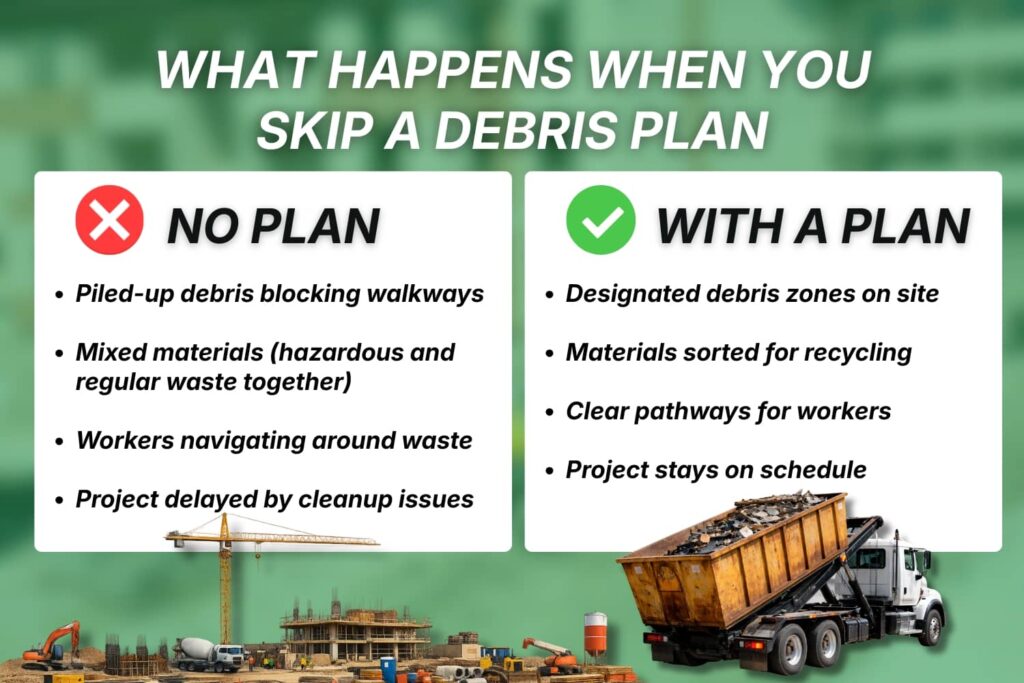
Construction crews need clear space to work. When debris piles grow too large, they block pathways and slow down the next stage of the project.
Regular cleanup helps keep work moving smoothly.
Local Waste Rules
Many cities have regulations for construction waste disposal. Some materials must be separated or taken to special facilities.
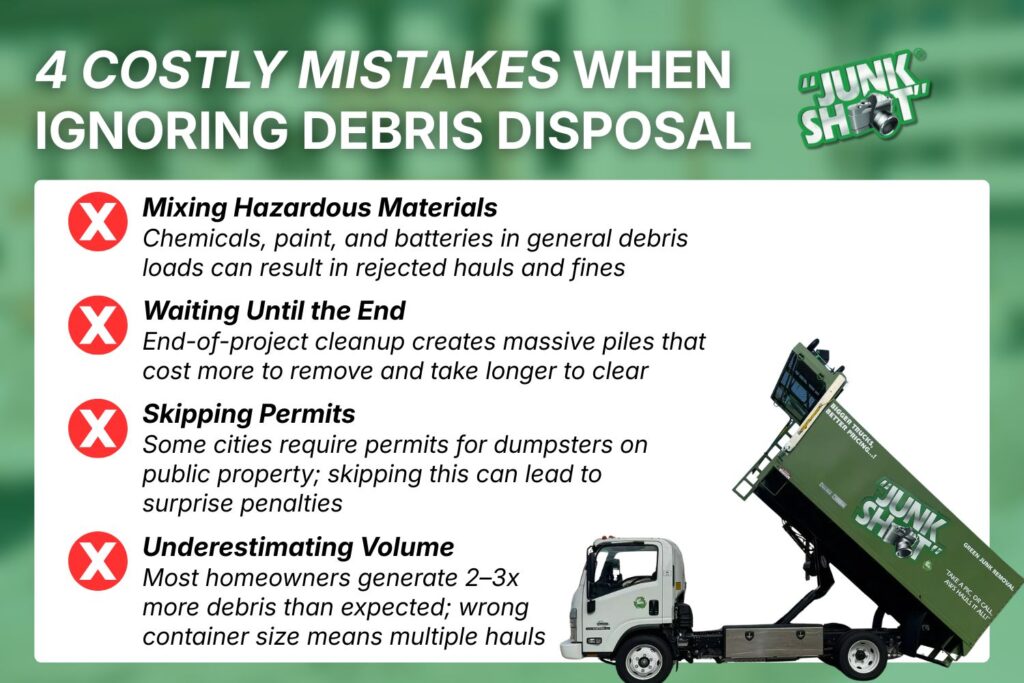
Mixing the wrong items can lead to rejected loads or extra fees at disposal sites.
Smart construction debris disposal helps avoid these problems and keeps projects on schedule.
Common Ways to Handle Construction Debris from Home Projects
Homeowners and contractors typically use one of three methods to manage renovation debris. Each option has advantages depending on the size of the project.
Renting a Roll-Off Dumpster
Dumpster rentals are common for large renovations or demolition projects. The container stays on site while debris is added throughout the project.
Benefits
- Large capacity for heavy waste
- Convenient for longer projects
Limitations
- Requires space for the container
- Rental time limits may apply
- Permits may be needed in some areas
Hauling Debris Yourself
Some homeowners choose to transport renovation waste using their own truck or trailer.
Benefits
- Full control over timing
- No rental contracts
Limitations
- Multiple trips to disposal sites
- Heavy lifting required
- Limited hauling capacity
Hiring a Professional Debris Removal Service
Professional debris removal teams handle the loading, hauling, and disposal of renovation waste.
This option is helpful for projects that produce heavy or bulky debris. It also saves time for homeowners and contractors who want to focus on the renovation itself.
If your project produces large amounts of waste, professional help can make the process much easier.
Smart Ways to Manage Construction Debris During a Renovation
Planning can reduce stress during a remodel. These simple strategies help keep debris under control from the start.
Plan Debris Removal Before Demolition Starts
Before tearing down walls or removing cabinets, decide how debris will be handled. Knowing where materials will go helps prevent large piles from building up.
Separate Materials When Possible
Keeping materials organized makes disposal easier and supports recycling efforts.
For example:
- Metal can often be recycled
- Concrete can be reused in construction projects
- Wood may be processed for reuse
Schedule Cleanups During the Project
Many homeowners wait until the end of a renovation to remove debris. This often creates large piles that are harder to manage.
Scheduling periodic pickups keeps the job site clean and easier to work in.
Work With Professionals for Large Projects
Major renovations produce heavy debris that requires special equipment to remove safely. Professional debris removal services can handle this work efficiently.
This approach also reduces the physical strain of lifting heavy materials.
When Professional Construction Debris Disposal Makes Sense
Small projects like painting or replacing a few fixtures may produce manageable waste. But larger renovations can quickly overwhelm standard disposal options.
Professional debris removal is often helpful for:
- Kitchen remodels
- Bathroom renovations
- Roof replacements
- Flooring removal projects
- Whole-home renovations
- Contractor job site cleanups
These projects often create bulky materials like tile, cabinetry, drywall, and stone. Removing these materials safely requires the right equipment and transportation.
How Technology Is Changing Debris Removal
Construction cleanup is evolving with new technology. Digital tools now make it easier to schedule pickups and estimate debris removal costs.
Some debris removal services offer mobile apps that allow users to submit photos of debris piles. These photos help generate quick and accurate quotes without long phone calls or on-site inspections.
This type of system helps contractors and homeowners schedule debris pickup faster and avoid delays.
Efficient logistics also reduce the number of trips needed to remove debris, which can lower fuel use and improve overall efficiency.
Sustainable Construction Debris Disposal
More homeowners today care about where renovation waste ends up. Construction debris does not always need to go straight to a landfill.
Responsible debris disposal often includes:
- Recycling metals, concrete, and asphalt
- Reusing materials when possible
- Donating salvageable items
- Reducing landfill waste through sorting
Recycling construction materials can also conserve natural resources. For example, recycling concrete saves energy compared to producing new material from raw resources.
These practices support a growing circular economy in construction.
Related Questions
How do you dispose of construction debris from a home renovation?
Construction debris can be removed through dumpster rentals, hauling materials to disposal facilities, or hiring a professional debris removal service that handles loading and transportation.
What is the easiest way to remove renovation debris?
Hiring a professional debris removal service is often the easiest option because it eliminates heavy lifting and reduces the need for multiple trips to disposal sites.
Do contractors handle construction debris disposal?
Some contractors include debris removal in their services. Others rely on specialized debris removal companies to handle cleanup during and after construction.
What materials cannot go in general construction debris loads?
Hazardous materials such as chemicals, paint, batteries, and certain adhesives usually require special disposal methods and cannot be mixed with standard construction debris.
Conclusion
Renovations should be exciting, not stressful. Without a clear cleanup plan, debris can quickly take over your job site and slow down progress.
Smart construction debris disposal keeps the workspace safe and the project moving forward. Junk Shot makes cleanup simple by handling the heavy lifting, so homeowners and contractors can stay focused on the renovation.
Need help clearing renovation debris? Contact Junk Shot today to schedule fast, reliable cleanup and keep your project on track.